
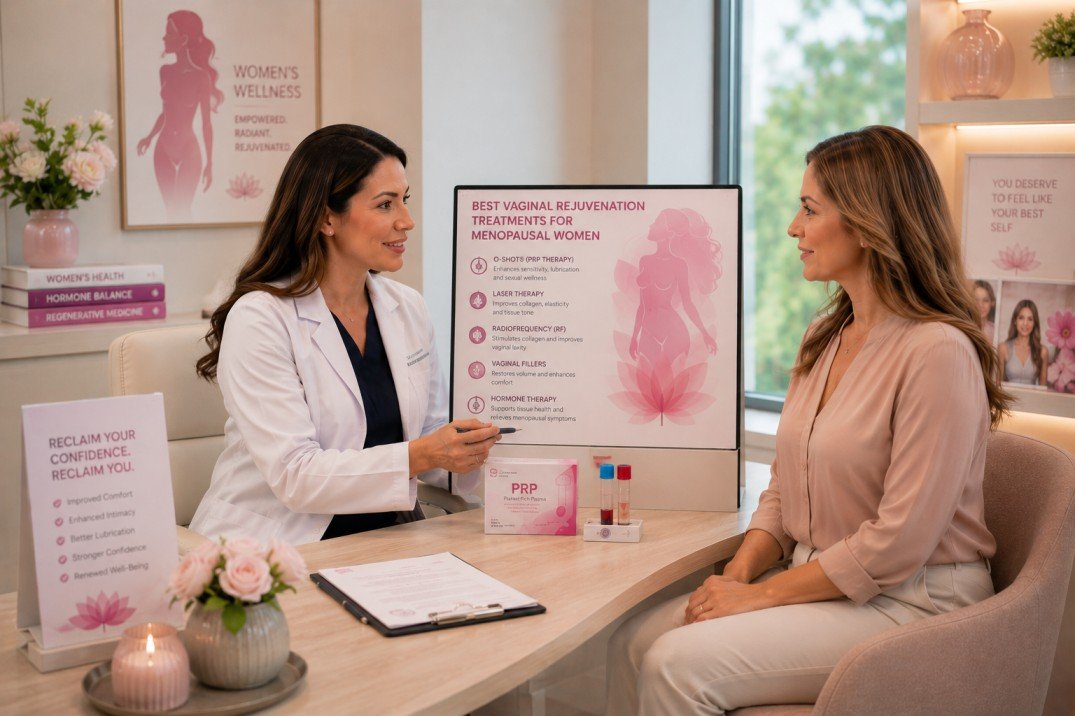
Menopause is a natural stage of life that marks the end of a woman's reproductive years, but the hormonal changes that accompany it can bring a range of physical and emotional challenges. While hot flashes and mood changes often receive the most attention, many women find that vaginal health changes have an even greater impact on their daily comfort, intimate relationships, and overall quality of life. Vaginal dryness, discomfort during intercourse, reduced lubrication, decreased sensitivity, and mild urinary leakage are common concerns that can persist long after menopause begins.
Fortunately, advances in women's health have expanded treatment options beyond traditional hormone therapy. Today, vaginal rejuvenation treatments offer both surgical and non-surgical approaches designed to improve vaginal tissue health, restore comfort, and enhance sexual wellness. Among these, Platelet-Rich Plasma (PRP) therapy, commonly known as the O-Shot, has emerged as one of the most promising regenerative treatments for menopausal women seeking a minimally invasive solution.
Unlike procedures that rely on surgery or synthetic materials, the O-Shot uses Platelet-Rich Plasma (PRP) prepared from your own blood to stimulate natural tissue repair, improve blood circulation, and encourage collagen production. This regenerative approach aims to address the underlying tissue changes associated with menopause rather than simply masking symptoms.
While no single treatment is ideal for every woman, understanding the available options allows you to make informed decisions with your healthcare provider. This comprehensive guide explores the best vaginal rejuvenation treatments for menopausal women, explains how the O-Shot works, reviews current scientific evidence, and discusses whether PRP therapy may be the right choice for your individual needs.
Understanding Vaginal Changes During Menopause
Menopause causes a significant decline in estrogen production, and this hormonal shift affects nearly every tissue within the female reproductive system. Estrogen plays a vital role in maintaining vaginal elasticity, blood flow, natural lubrication, collagen production, and tissue thickness. As estrogen levels decrease, these protective effects gradually diminish, leading to structural and functional changes commonly referred to as genitourinary syndrome of menopause (GSM).
Unlike hot flashes, which often improve over time, vaginal symptoms may persist or even worsen if left untreated. Many women notice that the vaginal walls become thinner, drier, and less elastic. Reduced blood flow and collagen loss contribute to decreased sensitivity, while lower natural lubrication can make intimacy uncomfortable or painful.
These changes are extremely common. Research suggests that up to 50% of postmenopausal women experience symptoms related to vaginal atrophy or genitourinary syndrome of menopause, although many never discuss these concerns with their healthcare provider. Embarrassment, misconceptions about aging, or the belief that symptoms are unavoidable often prevent women from seeking treatment.
The impact extends beyond physical discomfort. Vaginal dryness and pain during intercourse may affect intimacy, self-confidence, emotional well-being, and relationship satisfaction. Some women also experience urinary symptoms such as urgency, recurrent urinary tract infections, or mild stress urinary incontinence because estrogen deficiency affects tissues surrounding the bladder and urethra.
The encouraging news is that these symptoms are treatable. Modern vaginal rejuvenation therapies—including PRP therapy, laser treatments, radiofrequency devices, and hormone-based approaches—offer multiple options for improving vaginal health and restoring comfort after menopause.
Why Menopause Affects Vaginal Health
Estrogen is essential for maintaining healthy vaginal tissue throughout a woman's reproductive years. It supports blood circulation, stimulates collagen production, maintains tissue elasticity, and encourages the production of natural vaginal secretions that keep tissues hydrated and resilient.
When estrogen declines during menopause, these protective mechanisms gradually weaken. The vaginal lining becomes thinner, collagen production slows, blood flow decreases, and the tissue loses much of its elasticity. As a result, many women experience vaginal dryness, irritation, itching, burning sensations, and discomfort during intercourse.
The tissues supporting the urethra and bladder are also affected. Reduced collagen and weaker connective tissue may contribute to mild urinary leakage, particularly during coughing, laughing, sneezing, or exercise. Some women notice increased urinary urgency or more frequent urinary tract infections because changes in the vaginal environment alter the natural balance of protective bacteria.
Lifestyle factors can further influence symptom severity. Smoking, obesity, chronic medical conditions such as diabetes, certain medications, and limited sexual activity may accelerate tissue changes or reduce blood circulation. Because every woman experiences menopause differently, symptoms vary widely in both type and severity.
Understanding these biological changes helps explain why regenerative treatments such as the O-Shot have attracted attention. Rather than replacing estrogen, PRP therapy aims to stimulate the body's natural healing response by encouraging healthier tissue, improved circulation, and collagen remodeling.
Common Symptoms Women Experience
Menopausal vaginal changes often develop gradually, making them easy to overlook at first. What begins as occasional dryness or mild discomfort may eventually interfere with daily activities and intimate relationships if left untreated.
Common symptoms include:
- Vaginal dryness
- Burning or itching
- Pain during sexual intercourse
- Reduced natural lubrication
- Decreased sexual sensation
- Difficulty achieving orgasm
- Mild stress urinary incontinence
- Increased urinary urgency
- Recurrent urinary tract infections
- Vaginal laxity or reduced elasticity
These symptoms can significantly affect quality of life. Women may avoid intimacy because of discomfort, reduce physical activity due to bladder leakage, or experience anxiety and reduced self-confidence.
Many of these symptoms overlap, which is why comprehensive evaluation is important. Hormonal changes, pelvic floor weakness, childbirth history, chronic medical conditions, and certain medications may all contribute. Addressing only one factor may not provide complete symptom relief.
Fortunately, today's treatment options range from conservative lifestyle changes and pelvic floor therapy to hormone replacement and regenerative procedures like the O-Shot. Working with an experienced healthcare provider helps determine which combination of treatments is most appropriate for your individual symptoms and health history.
What Is Vaginal Rejuvenation?
Vaginal rejuvenation refers to a range of treatments designed to improve the health, function, and appearance of vaginal tissues. While some procedures focus primarily on cosmetic concerns, many are intended to relieve symptoms associated with aging, menopause, childbirth, or pelvic floor changes.
Modern vaginal rejuvenation includes both surgical and non-surgical options. Surgical procedures may tighten vaginal tissues or repair pelvic support structures but typically involve anesthesia, longer recovery times, and greater risks.
Non-surgical treatments, by contrast, aim to stimulate the body's natural healing processes with minimal downtime. These include Platelet-Rich Plasma (PRP) therapy (the O-Shot), laser therapy, radiofrequency treatments, and, in appropriate cases, localized estrogen therapy.
The goal of these therapies is not simply cosmetic. Many women seek vaginal rejuvenation to improve lubrication, reduce discomfort during intercourse, enhance tissue elasticity, improve bladder support, and restore overall vaginal health.
Among the available non-surgical options, the O-Shot has become particularly appealing because it uses the patient's own platelet-rich plasma to promote natural tissue regeneration. Although research is ongoing, early studies and patient reports suggest that PRP therapy may improve several menopausal symptoms simultaneously, making it an attractive option for women looking for a minimally invasive treatment.
Surgical vs. Non-Surgical Vaginal Rejuvenation
When exploring vaginal rejuvenation options, it's important to understand that treatments generally fall into two categories: surgical and non-surgical. The right choice depends on your symptoms, medical history, treatment goals, and the recommendations of a qualified women's health specialist.
Surgical vaginal rejuvenation procedures, such as vaginoplasty or labiaplasty, are typically performed to address structural concerns or repair tissues after childbirth or pelvic trauma. While these procedures can provide meaningful benefits for selected patients, they involve anesthesia, incisions, recovery time, and the potential risks associated with surgery. Recovery may take several weeks, and surgery is generally reserved for women with significant anatomical concerns rather than those experiencing menopause-related tissue changes alone.
Non-surgical vaginal rejuvenation treatments have become increasingly popular because they offer a minimally invasive approach with little or no downtime. These therapies focus on improving tissue quality, stimulating collagen production, enhancing blood flow, and relieving symptoms such as vaginal dryness, reduced elasticity, discomfort during intercourse, and mild urinary leakage.
Compared with surgery, non-surgical treatments allow many women to return to their normal routine on the same day. While results are often more gradual and may require maintenance treatments, they appeal to women seeking symptom relief without undergoing an operation.
The most common non-surgical options include:
| Treatment | Primary Purpose | Downtime |
|---|---|---|
| PRP Therapy (O-Shot) | Tissue regeneration, lubrication, sensitivity, mild urinary leakage | Minimal |
| Laser Therapy | Stimulates collagen and improves vaginal tissue | Minimal |
| Radiofrequency (RF) | Tightens tissue and promotes collagen production | Minimal |
| Local Estrogen Therapy | Restores hormone-dependent tissue health | Minimal |
Each option has advantages and limitations. Your healthcare provider can help determine which treatment—or combination of treatments—is most appropriate based on your symptoms and medical history.
Why Non-Surgical Treatments Are Becoming More Popular
In recent years, non-surgical vaginal rejuvenation has seen rapid growth as more women seek effective treatments with fewer risks and shorter recovery times. Advances in regenerative medicine and energy-based technologies have expanded the options available for managing menopause-related vaginal symptoms.
Many women prefer non-surgical procedures because they are performed in an outpatient setting, require little interruption to daily life, and avoid the recovery associated with surgery. For women balancing careers, family responsibilities, and active lifestyles, this convenience is a significant advantage.
Another reason for their popularity is the growing recognition that menopause-related symptoms are treatable. Rather than accepting vaginal dryness, painful intercourse, or bladder leakage as inevitable, many women are seeking therapies that support long-term vaginal health and overall well-being.
Among the available treatments, Platelet-Rich Plasma (PRP) therapy, commonly known as the O-Shot, has attracted considerable attention because it uses the body's own regenerative potential. Instead of introducing synthetic materials, PRP aims to encourage healthier tissue through natural healing mechanisms.
Although no non-surgical treatment can stop the aging process, these therapies may help improve comfort, tissue quality, and quality of life for appropriately selected patients. As clinical research continues to evolve, healthcare providers are gaining a better understanding of which women are most likely to benefit from each approach.
Best Vaginal Rejuvenation Treatments for Menopausal Women
Choosing the best vaginal rejuvenation treatment depends on your symptoms, overall health, and treatment goals. Some women primarily struggle with vaginal dryness, while others are more concerned about discomfort during intimacy, decreased sensation, or mild bladder leakage. In many cases, a personalized treatment plan combining multiple approaches offers the best results.
Comparison of Popular Vaginal Rejuvenation Treatments
| Treatment | Best For | Benefits | Considerations |
|---|---|---|---|
| PRP Therapy (O-Shot) | Vaginal dryness, reduced sensitivity, mild stress urinary incontinence | Uses your own blood to support tissue regeneration and blood flow | Evidence is promising but still evolving |
| Laser Therapy | Vaginal atrophy and dryness | Stimulates collagen remodeling | May require multiple sessions |
| Radiofrequency (RF) | Mild laxity and tissue tightening | Encourages collagen production without surgery | Results develop gradually |
| Local Estrogen Therapy | Genitourinary syndrome of menopause | Highly effective for many women with estrogen deficiency | Not suitable for every patient; requires medical assessment |
| Pelvic Floor Physical Therapy | Pelvic floor weakness and urinary symptoms | Strengthens muscles supporting the bladder | Often combined with other treatments |
The best treatment isn't necessarily the newest—it's the one that matches your diagnosis and health needs. A thorough evaluation by a qualified healthcare provider is essential before deciding on any vaginal rejuvenation procedure.
Platelet-Rich Plasma (PRP) Therapy – The O-Shot
Among today's non-surgical vaginal rejuvenation options, the O-Shot stands out because it focuses on regeneration rather than replacement. Instead of using synthetic fillers or energy-based devices alone, the treatment uses Platelet-Rich Plasma (PRP) prepared from the patient's own blood to stimulate natural healing.
The procedure begins with a simple blood draw. The blood is processed in a centrifuge to separate and concentrate the platelets, which contain growth factors involved in tissue repair, collagen production, and blood vessel formation. After local numbing medication is applied, the PRP is injected into specific vaginal tissues.
The biological goal is to improve tissue quality by encouraging:
- Increased blood circulation
- Collagen remodeling
- Tissue regeneration
- Improved vaginal lubrication
- Enhanced sensitivity
- Better support for surrounding tissues
Many menopausal women seek the O-Shot because it may address multiple symptoms simultaneously. Some report improvements in vaginal dryness, discomfort during intercourse, decreased sexual sensation, and mild stress urinary incontinence. Because the treatment uses the patient's own blood, the risk of allergic reactions is very low.
It's important to note that while patient experiences and early studies are encouraging, PRP therapy is still considered an emerging treatment in this area. Women should discuss expected outcomes, available evidence, and alternative therapies with an experienced healthcare provider before proceeding.
Vaginal Laser Therapy
Vaginal laser therapy is another non-surgical option used to improve symptoms associated with menopause. These devices deliver controlled laser energy to the vaginal tissue, stimulating collagen production and promoting tissue remodeling.
Some women report improvements in vaginal dryness, elasticity, and comfort after a series of treatments. However, outcomes vary, and several sessions are often required. The U.S. Food and Drug Administration (FDA) has also cautioned against marketing energy-based vaginal devices for unapproved indications without sufficient evidence.
Laser therapy may be appropriate for carefully selected patients when performed by experienced clinicians, but women should have realistic expectations and discuss the current evidence before treatment.
Radiofrequency (RF) Therapy
Radiofrequency therapy uses gentle heat rather than laser energy to stimulate collagen production within vaginal tissues. The procedure is generally comfortable, requires little downtime, and may improve mild vaginal laxity and tissue quality.
Like laser therapy, RF treatments typically require multiple sessions and maintenance treatments over time. While many patients report positive experiences, additional high-quality research is still needed to establish long-term effectiveness for menopause-related symptoms.
Hormone Therapy
For many women, local vaginal estrogen therapy remains one of the most well-established treatments for genitourinary syndrome of menopause (GSM). Estrogen creams, tablets, or vaginal rings can effectively improve dryness, tissue thickness, lubrication, and urinary symptoms caused by estrogen deficiency.
Hormone therapy is supported by strong clinical evidence and is often recommended as a first-line treatment for women without contraindications. However, it may not be appropriate for everyone, particularly women with certain hormone-sensitive cancers or other medical conditions.
Some women prefer non-hormonal alternatives such as PRP therapy, particularly if they cannot or choose not to use estrogen. Discussing the benefits and risks of each option with a healthcare provider is the best way to determine the most appropriate treatment.
Why PRP Therapy (O-Shot) Is a Promising Option
Among the available non-surgical vaginal rejuvenation treatments, the O-Shot has generated significant interest because of its regenerative approach. Instead of simply relieving symptoms, PRP therapy aims to improve the health of vaginal tissue by supporting the body's natural healing processes.
For menopausal women, this may be particularly valuable because declining estrogen affects tissue quality, collagen production, and blood circulation. By delivering concentrated growth factors directly to targeted tissues, PRP may help improve vaginal health without surgery or synthetic materials.
Women who report positive outcomes often describe:
- Improved natural lubrication
- Increased vaginal comfort
- Enhanced sensitivity
- Reduced discomfort during intimacy
- Better confidence
- Improvement in mild stress urinary incontinence
While these reported benefits are encouraging, it's important to emphasize that scientific evidence is still developing. Current studies are relatively small, and more randomized controlled trials are needed before PRP becomes a standard treatment recommendation.
Nevertheless, for women seeking a minimally invasive option—particularly those unable or unwilling to use hormone therapy—the O-Shot may be a reasonable treatment to discuss with a qualified women's health provider.
How the O-Shot Works
The O-Shot is based on the principles of regenerative medicine, using Platelet-Rich Plasma (PRP) prepared from the patient's own blood to encourage tissue repair and improve vaginal health. Unlike cosmetic fillers or surgical procedures, the O-Shot works by stimulating the body's natural healing processes rather than introducing foreign materials.
The procedure begins with a small blood draw, similar to a routine laboratory test. The blood is placed in a centrifuge, where it is spun at high speed to separate the platelet-rich plasma from the other blood components. This concentrated PRP contains platelets rich in growth factors that support collagen production, blood vessel formation, and tissue regeneration.
After a topical anesthetic or local numbing medication is applied, the PRP is injected into carefully selected areas of the vaginal tissue. The treatment typically takes 30 to 60 minutes, and most women can return to their normal daily activities shortly afterward.
The goal of the O-Shot is to improve the overall health of vaginal tissue by:
- Stimulating collagen production
- Increasing blood circulation
- Supporting tissue repair
- Enhancing natural lubrication
- Improving tissue elasticity
- Promoting healthier nerve function
Since regeneration is a gradual biological process, results develop over time rather than immediately. Some women notice subtle improvements within a few weeks, while optimal results often appear after 6 to 12 weeks.
Benefits of PRP for Menopausal Women
Menopause affects every woman differently, which is why treatment should always be individualized. For women experiencing symptoms related to declining estrogen and tissue aging, PRP therapy may provide several potential benefits by improving the health of the vaginal tissue itself.
Women who respond well to the O-Shot commonly report:
| Potential Benefit | How It May Help |
|---|---|
| Improved vaginal lubrication | Helps reduce dryness and irritation |
| Increased tissue elasticity | Supports healthier vaginal tissue |
| Enhanced sexual sensation | Improved blood flow may increase sensitivity |
| Reduced discomfort during intercourse | Healthier tissue may improve comfort |
| Mild improvement in stress urinary incontinence | May strengthen tissues supporting the urethra |
| Increased confidence | Better comfort and sexual wellness can positively affect quality of life |
One of the advantages of PRP therapy is that it uses the patient's own blood, reducing the likelihood of allergic reactions or rejection. Recovery is generally quick, and most women resume normal activities on the same day.
It is important to remember, however, that results vary from person to person. Factors such as age, overall health, hormonal status, smoking, and the severity of symptoms all influence treatment outcomes. While some women experience significant improvement, others may notice more modest changes or require additional therapies as part of a comprehensive menopause management plan.
What Current Research Says
The use of PRP for vaginal rejuvenation and menopausal symptoms is an active area of research. Early studies have reported encouraging improvements in vaginal health, sexual function, and mild urinary symptoms, but the overall body of evidence remains limited.
Several pilot studies have found improvements in standardized measures such as the Female Sexual Function Index (FSFI) and patient-reported quality-of-life questionnaires after PRP treatment. Women have reported better lubrication, increased comfort during intercourse, improved sexual satisfaction, and reductions in mild stress urinary incontinence.
However, current research also has important limitations:
| Strengths | Limitations |
|---|---|
| Encouraging patient outcomes | Small sample sizes |
| Low rate of serious complications | Limited randomized controlled trials |
| Regenerative biological mechanism | Different PRP preparation methods |
| Growing clinical interest | Lack of standardized treatment protocols |
Professional organizations, including the American College of Obstetricians and Gynecologists (ACOG) and the International Society for the Study of Women's Sexual Health (ISSWSH), acknowledge the promise of regenerative therapies while emphasizing that additional high-quality research is needed before PRP becomes part of routine treatment guidelines.
This balanced perspective is important. The O-Shot is not a guaranteed solution, but it may be a reasonable option for selected patients when discussed within the context of evidence-based care and realistic expectations.
Who Is an Ideal Candidate for the O-Shot?
The O-Shot may be appropriate for menopausal women who are experiencing symptoms related to declining estrogen and age-related tissue changes, particularly if they prefer a minimally invasive treatment or cannot use hormone therapy. Careful patient selection is one of the most important factors influencing treatment satisfaction.
Women who may be good candidates include those experiencing:
- Vaginal dryness
- Reduced natural lubrication
- Pain or discomfort during intercourse
- Decreased sexual sensation
- Difficulty achieving orgasm
- Mild stress urinary incontinence
- Vaginal tissue changes after menopause
Before recommending treatment, a qualified healthcare provider will typically review your medical history, discuss your symptoms, and perform an examination to determine whether PRP therapy is appropriate.
The O-Shot may not be suitable for women with:
- Active pelvic infections
- Blood clotting disorders
- Platelet dysfunction syndromes
- Active gynecologic cancers
- Severe uncontrolled medical conditions
- Significant pelvic organ prolapse requiring surgical treatment
An individualized consultation ensures that treatment decisions are based on your specific symptoms, medical history, and overall health rather than marketing claims or generalized recommendations.
Risks, Recovery, Cost, and Results
Like any medical procedure, the O-Shot carries potential risks, although serious complications are uncommon when performed by an experienced healthcare professional.
Possible Side Effects
Most side effects are mild and temporary, including:
- Mild swelling
- Tenderness
- Bruising
- Temporary spotting
- Slight discomfort at the injection site
These symptoms usually resolve within a few days without additional treatment.
Recovery
Recovery is generally quick. Most women return to work and normal daily activities immediately after the procedure. Depending on the provider's recommendations, patients may be advised to avoid strenuous exercise or sexual activity for several days while the treated tissues recover.
Cost
The O-Shot is typically considered an elective procedure and is not usually covered by insurance. Approximate pricing:
| Country | Typical Cost |
|---|---|
| United States | $900–$2,000 USD |
| Canada | CAD $1,000–$2,200 |
| United Kingdom | £700–£1,500 |
| Australia | AUD $1,000–$2,500 |
Costs vary depending on the provider, geographic location, and PRP system used.
Results
Many women begin noticing gradual improvements within 4 to 8 weeks, with continued tissue remodeling over 2 to 3 months. For those who respond well, benefits may last 12 to 18 months, although maintenance treatments may be recommended based on individual needs.
Choosing the Right Vaginal Rejuvenation Treatment
Selecting the most appropriate vaginal rejuvenation treatment requires more than simply comparing procedures—it requires understanding the underlying cause of your symptoms. Menopause-related vaginal changes can result from hormonal decline, reduced blood flow, collagen loss, pelvic floor weakness, or a combination of these factors.
For many women, local estrogen therapy remains the first-line treatment for genitourinary syndrome of menopause, especially when there are no contraindications. Pelvic floor physical therapy is also highly effective for women with muscle weakness contributing to urinary symptoms.
For those seeking a non-hormonal, minimally invasive option, PRP therapy (the O-Shot) may be worth discussing. Its regenerative approach offers the potential to improve vaginal tissue health, lubrication, sensitivity, and mild stress urinary incontinence without surgery. While more research is needed to establish long-term effectiveness, early evidence and patient experiences suggest that it may provide meaningful benefits for selected women.
The most effective treatment plan is often personalized and may combine several therapies rather than relying on a single intervention. Working with a qualified gynecologist or women's health specialist is the best way to identify the option that aligns with your medical history, treatment goals, and lifestyle.
Conclusion
Menopause brings significant hormonal changes that can affect vaginal health, intimacy, and overall quality of life. Vaginal dryness, reduced elasticity, discomfort during intercourse, and mild urinary leakage are common symptoms, but they do not have to be accepted as an inevitable part of aging.
Today, women have access to a variety of treatment options, including local hormone therapy, laser treatments, radiofrequency therapy, pelvic floor rehabilitation, and regenerative therapies such as the O-Shot. Each has a role depending on individual symptoms, preferences, and medical history.
Among these options, the O-Shot has emerged as a promising non-surgical treatment because it uses the body's own platelet-rich plasma to support tissue repair and improve vaginal health. Although current research is still evolving, many women report improvements in lubrication, comfort, sexual wellness, and mild urinary symptoms after treatment.
If you're experiencing menopausal vaginal symptoms, consult a qualified healthcare provider to discuss the available options and determine whether PRP therapy could be an appropriate part of your personalized treatment plan.
Frequently Asked Questions
1. What is the best vaginal rejuvenation treatment for menopausal women?
The best treatment depends on your symptoms and medical history. Local vaginal estrogen therapy is well established for many women with genitourinary syndrome of menopause, while non-surgical options such as the O-Shot, laser therapy, and radiofrequency treatments may also be considered based on individual needs.
2. Can the O-Shot help with vaginal dryness after menopause?
Some women report improved vaginal lubrication and comfort after PRP therapy. While early research is encouraging, larger clinical studies are still needed to confirm its effectiveness.
3. Is the O-Shot a replacement for hormone therapy?
Not necessarily. The O-Shot and hormone therapy work differently. Some women use PRP as an alternative when hormone therapy is not suitable, while others may benefit from combining treatments under medical supervision.
4. How long do O-Shot results last?
For women who respond well, benefits often last 12 to 18 months, although results vary and maintenance treatments may be recommended.
5. Is the O-Shot safe?
When performed by a qualified healthcare professional using sterile techniques, the O-Shot is generally considered safe. Since it uses the patient's own platelet-rich plasma, allergic reactions are rare, but discussing the potential risks and benefits with your provider is essential before treatment.